
Poetry

Stories from the Bohai Sea

Ten poems by Xiao Shui – translated by Irene Chen and Judith Huang

From Spittoon Literary Magazine

Wandering Soul

He was seven that year, when his father fell down at home, he picked up the phone, not panicking at all.

His mother, a painter, remarried a retired general, while he chose to avoid enlistment through self-mutilation.

He came from Daejeon, South Korea. In the taxi he gave me an unexpected kiss, then became distant again, like a stone evaporating from a stone.

Finally leaving China, in an airport hotel, he decided to once more experience the thrill of a stranger.

Chinese Literature Podcast

The Great Maudgalyayana

Rob Moore and Lee Moore dust off a Buddhist classic 

In a tale for the ages, Mulian, an Indian Buddhist monk, uses his spiritual currency in order to rescue his mother from one of the worst of the Buddhist hells. Not only is the story one of the first examples of vernacular Chinese fiction available, it is also one of the best examples of the cross-current of cultures that was China during the period when Buddhism was expanding. Rob and Lee discuss the shady dealings that led to the earliest version of this story being uncovered in the Dunhuang caves, debate the possible influence of not only Confucian but also Christian morality, and draw comparisons to Dante's Divine Comedy as a point of reference for unfamiliar Western readers.
 

Chinese Corner

Language or Dialect?

The continuum of regional Chinese speech – Kellen Parker van Dam

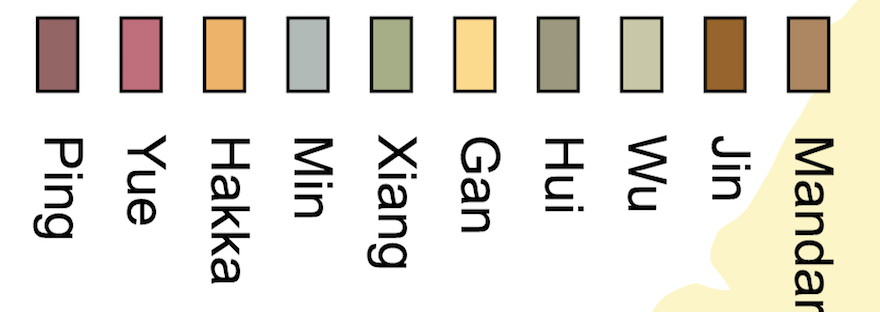
If internet forum discussions are any indication, there’s something of an obsession with pinning down the difference between a dialect and a language. In Chinese language circles, we’re hit with the additional complexity of the term fāngyán, translated variously as “dialect,” “variety,”  “regiolect” and “topolect.” Every new arrival to Chinese language learning wrestles with fāngyán at one point or other.

Reviews

Sympathy for the Devil

Lee Moore reviews Luo Guanzhong’s Quelling the Demons’ Revolt

Full of blood-thirsty demons, corrupt officials, and doe-eyed beauties popping out of paintings, Patrick Hanan’s posthumously-released translation of Luo Guanzhong’s 14th century novel, Quelling the Demons’ Revolt, is arguably a novel in name only, at times feeling more like a collection of short stories that have been strung together. Unlike later Ming novels, like the Plum in the Golden Vase, Quelling the Demons’ Revolt lacks the narrative tightness that modern readers have come to expect. But, setting aside the lack of a cohesive ending, the novel remains a rollicking ride through the weird and wacky world of the early modern Chinese supernatural.

Video

Portrait of a Beijinger: Beneath the Makeup

A Peking Opera singer takes off his mask – Tom Fearon

Editor’s note: Portrait of a Beijinger is a four-part video series by Tom Fearon and Abel Blanco, profiling a different and unusual character from the streets of Beijing. In this first episode of the series, Tom meets Peking Opera singer Liu Xinran, and describes the encounter in his own words below. The video is viewable on Youku for streamers in China, and on Vimeo.

Portrait of a Beijinger 北京人的肖像 - Beneath the Makeup 脸谱之下 from Abel Blanco on Vimeo.